
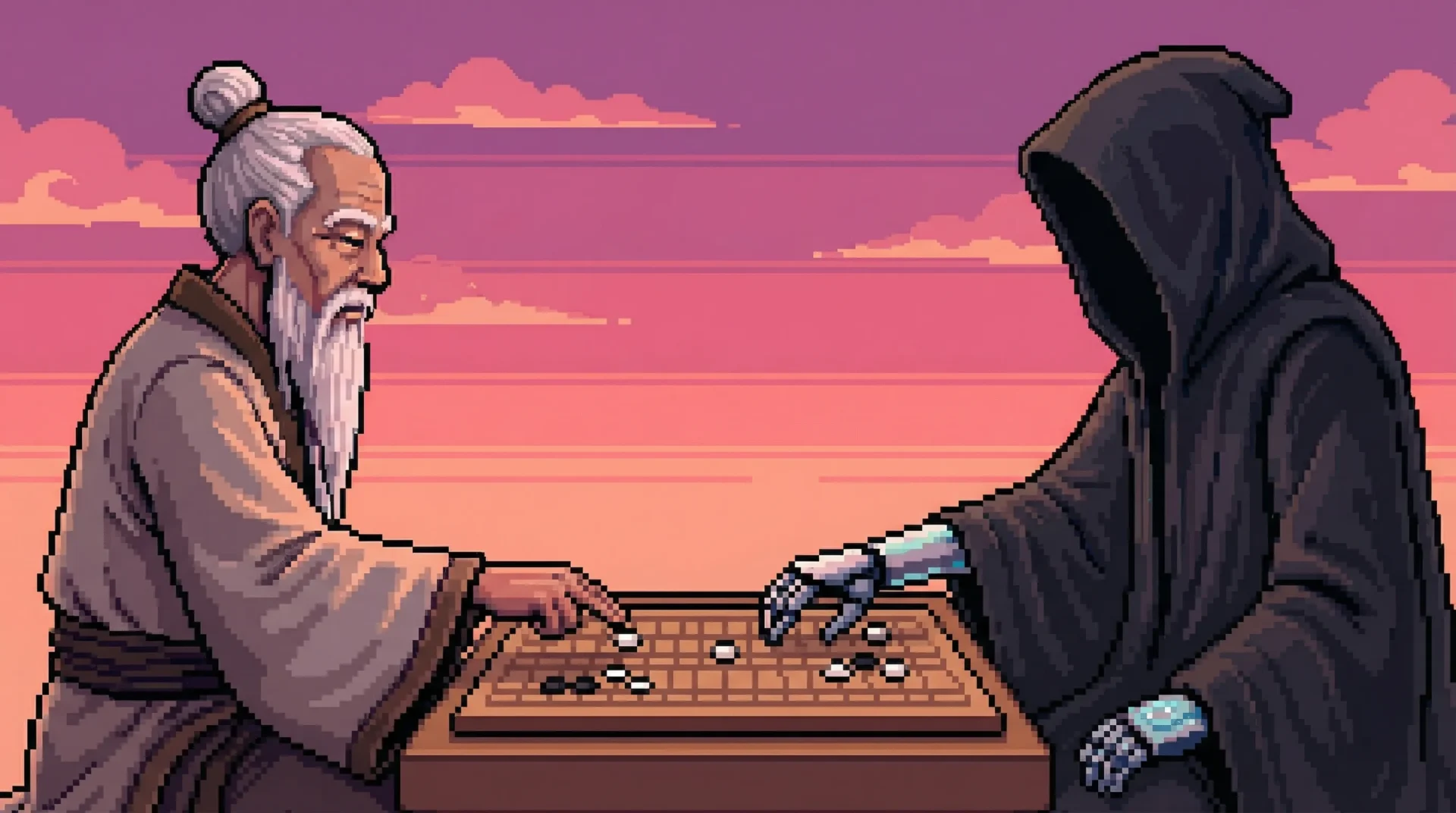
With the latest wave of frontier LLMs, something fundamental has shifted. Not in the technology, but in us. Previously, AI felt like sophisticated software: a powerful tool with visible seams. Now it feels like a sharper version of your own mind, one that doesn’t tire, doesn’t hesitate, and rarely makes the kinds of errors that used to reassure you of your own value. This isn’t an upgrade to a tool. It’s a rewrite of the self-perception contract that intellectual professionals have operated under for decades.
Over the past few weeks, I’ve watched this crisis unfold among colleagues and partners. Developers, strategists, copywriters, analysts, people who built careers on cognitive precision, sit with a new model for a few hours and emerge quieter. Not impressed-quiet. Unsettled-quiet. The enthusiasm that characterized the early AI years is curdling into something more complicated.
The Passenger Syndrome
There’s a particular kind of panic that emerges when you realize the car is driving itself, and doing it better than you ever did.
Intellectuals have long found safety in a world that generously rewarded cognitive output. Speed of thought, depth of analysis, quality of synthesis: these were scarce, therefore valuable. Now the scarcity has collapsed. Frontier models generate responses faster, often more accurately, and with a breadth of reference that no single human can match. The ego, built on cognitive distinctiveness, finds its ground dissolving.
The closest historical parallel isn’t another software release. It’s 2016: Lee Sedol, world Go champion, watching AlphaGo play Move 37. The move was so alien, so outside three thousand years of accumulated human Go logic, that commentators assumed it was a mistake. It wasn’t. More than the loss itself, players described encountering a genuinely different kind of mind. Not smarter like a faster calculator, but structurally different. Unreachable.
That foreignness is what today’s professionals are encountering, scaled across every intellectual domain at once. A lawyer watches a model draft a brief. A strategist watches it map competitive dynamics. A writer watches it find the exact tone they spent years developing. The sensation isn’t “this tool is useful.” It’s “this thing doesn’t need me.”
This is the Passenger Syndrome: the disorientation of a driver who realizes the vehicle has been taken over by an autopilot that is categorically better. Not slightly better. Categorically. The old worldview, built on the belief in personal cognitive indispensability, doesn’t bend under this pressure. It shatters.
The Practice of Healing
The key word is adaptation, not acceptance. These aren’t the same thing.
Neuroscientists describe “cognitive offloading”: delegating mental tasks to external systems, freeing internal resources for higher-order work. Writing itself is cognitive offloading. So is arithmetic. When calculators arrived, educators panicked about the erosion of mental math. What actually happened: humans stopped spending bandwidth on arithmetic and redirected it toward statistical thinking and financial modeling at scales manual calculation never allowed.
We’re now in the middle of a far larger offloading event. Logic, retrieval, synthesis, first-draft generation, these are moving outside the skull. The question isn’t whether to resist this. It’s what you do with the bandwidth that’s freed.
The professionals navigating this well share a pattern: they stopped competing with the model and started directing it. They bring what the model structurally cannot. Embodied judgment, contextual stakes, relationship capital, the ability to know when the technically correct answer is wrong for this client, this moment, these unstated constraints. The model produces the map. They know the terrain.
This isn’t cognitive capitulation. It’s removing the ego from a fight it was never going to win, and redirecting energy toward ground where humans still hold genuine advantage.
The Scale of an Atomic Shift
The temptation is to reach for comfortable analogies. “Every new technology disrupts, then stabilizes.” True, but insufficient. Nuclear weapons didn’t just change warfare. They permanently restructured how humanity thinks about existential risk, deterrence, and collective survival. Consciousness itself was altered in a way that didn’t change back.
The current shift is comparable in kind. What’s being restructured is the frame for understanding human cognitive value: what it means to be good at thinking, what makes expertise worth paying for, what role individual intelligence plays when collective machine intelligence scales faster than any individual can.
Nobody who genuinely engaged with the post-Hiroshima world went back to thinking about war the way they did before. Similarly, nobody who has seriously used frontier models goes back to thinking about cognitive labor and professional identity the way they did before. The frame has shifted. The work is adapting to the new frame rather than grieving the old one.
Flow and Adaptability
Return to the Go masters. After AlphaGo’s dominance, human players didn’t quit. They studied the AI’s moves, including Move 37, and integrated the new logic into their own play. Within years, the average caliber of human Go measurably improved. The encounter with a superior alien intelligence didn’t diminish the game. It expanded what humans understood it to contain.
The moment we’re approaching makes accurate forecasting genuinely difficult. Models releasing today will look significantly different from those releasing in eighteen months. Strategies optimized for the current landscape may be obsolete before they’re fully implemented.
The durable skill is adaptability itself: updating your mental model faster than the environment changes, entering new configurations with curiosity rather than defensiveness, maintaining what Zen practitioners call “beginner’s mind”, the willingness to not-know, and to find that productive rather than threatening.
Pessimists read the current moment correctly in the short term. The disruption is real, the displacement is real, the identity crisis is real. But optimists, those who move through the disruption toward available niches, who build with new tools rather than mourning old ones, accumulate resources over the long arc.
Choose optimism consciously. Not as denial, but as strategy. The passengers who grab the wheel, who decide they’re going to learn this new kind of driving, are the ones who arrive somewhere worth being.